Solving the Mystery of Death Valley's Moving Rocks
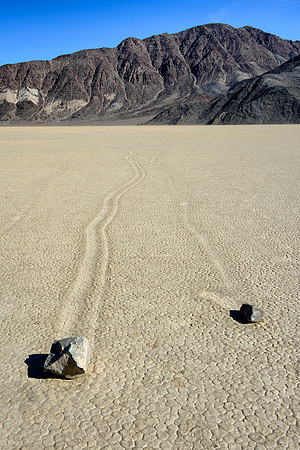
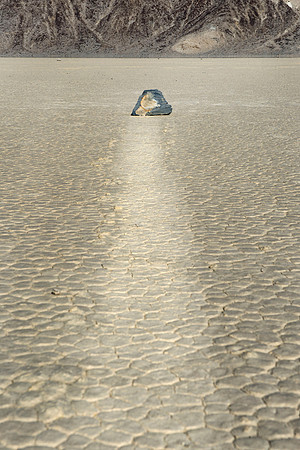
On a recent visit to Death Valley National Park in California, I walked across the vast expanse of flat desert called "the Racetrack Playa (beach)". This may seem like a strange name were it not that on this flat stretch of desert, in the middle of nowhere, rocks appear to be moving all on their own.
Where are these rocks racing to? What makes them move?


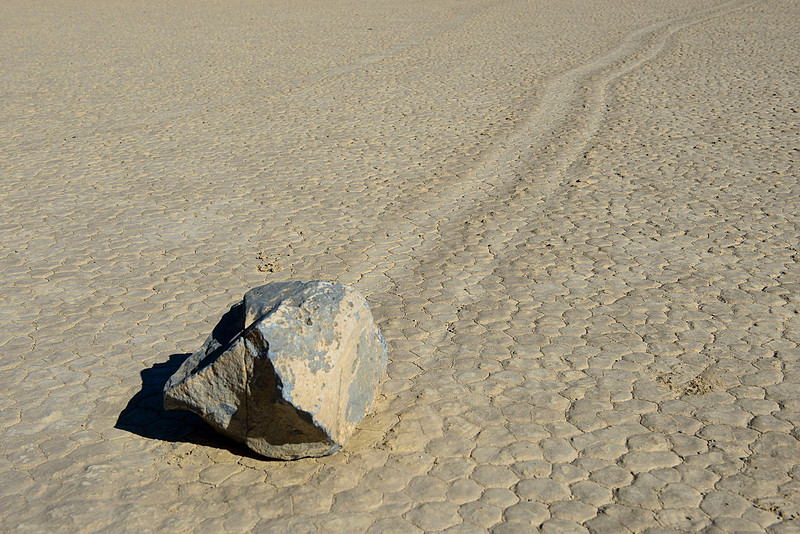
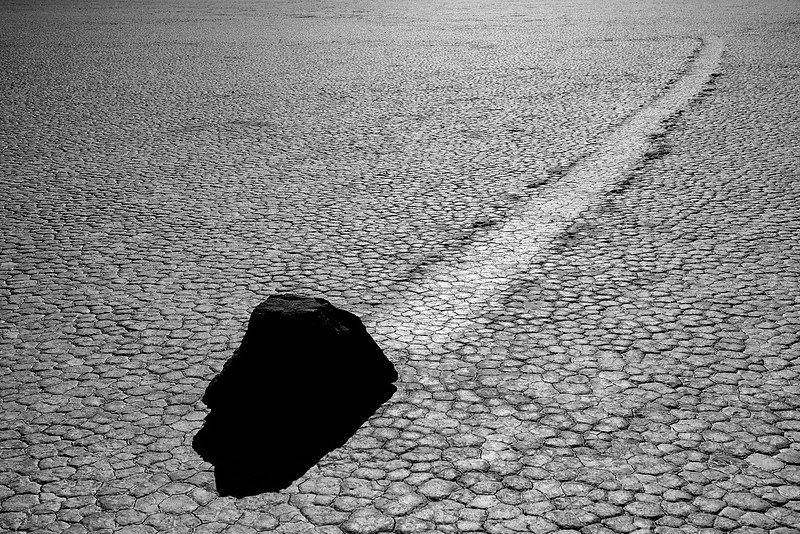
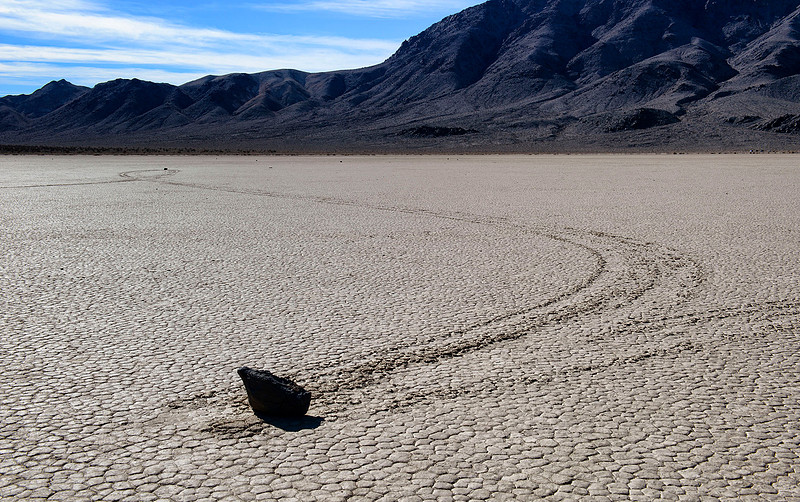
One of the rocks on the Racetrack Playa and the imprinted trail behind it
For years, people came up with the wildest theories. Where they moved by aliens from nearby Area 66 in Nevada? Were the stones moved by practical jokers? Perhaps the wind pushed them across the landscape?
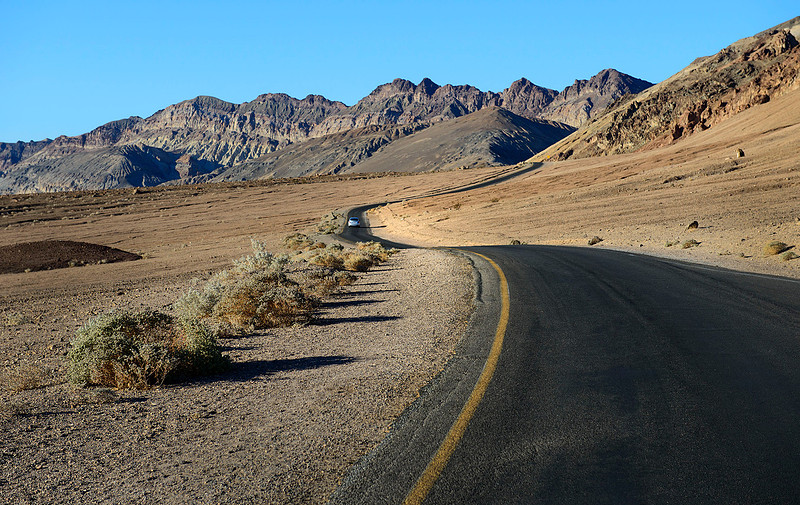
Leaving Furnace Creek
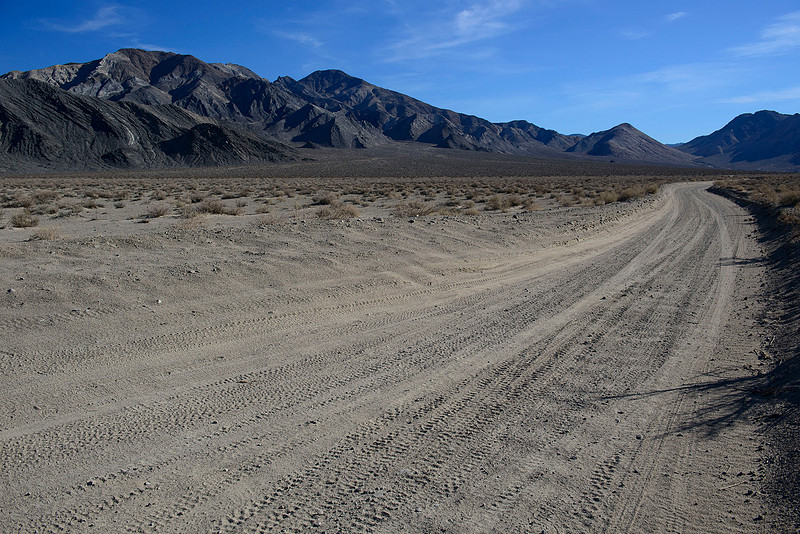
Even though many have heard of these moving rocks, only a very small fraction of Death Valley's visitors actually gets to experience the Racetrack Playa. Death Valley is located in a remote area of California but even if you make the trek out there, getting to the Racetrack Playa requires a substantial extra effort. From Death Valley's visitor center at Furnace Creek, reaching the Racetrack Playa means driving 133 km or 83 miles through the desert. One third of this distance is driven on rough, dusty (or muddy depending on the weather) dirt roads.
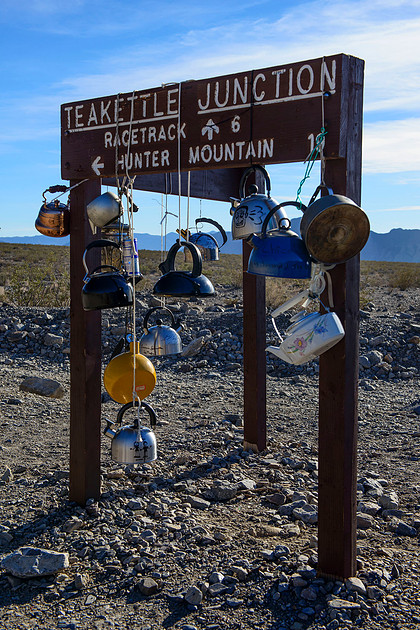
Along the way, visitors have decorated the road sign at Teakettle Junction, with ... teakettles.
Then finally, the Playa appears. At this point, you better hope that your vehicle hasn't rattled apart on the washboard roads since you'll have to make the long journey back after your visit. There are no facilities along the road (or other people on many occasions) so it's best to be prepared for emergencies. This is Death Valley after all, the place where the hottest temperature on earth was recorded: 56 C or 134 F!
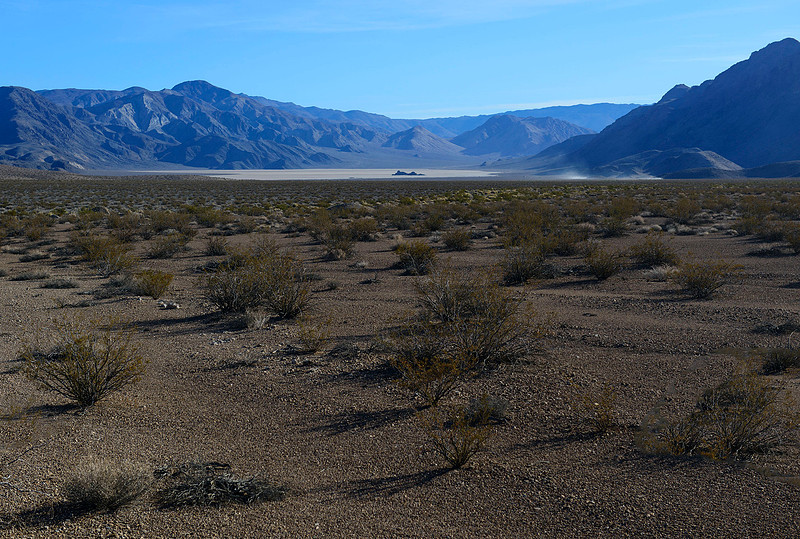
You arrive at the Playa, park your car and walk onto the large, flat area of 3 by 2 miles. There are no signs so you are on your own to locate the moving rocks. The National Park Service trusts the visitors to not touch (and move) the rocks and to clean up after themselves, as no park rangers are present.
So what makes these rocks move?

Researchers from San Diego's Oceanographic Institute connected GPS devices to some of the rocks. During one night in December, they noticed the rocks move. That night, the temperature had dropped to below freezing and rain created a thin layer of ice underneath the rocks. As the temperature warmed, the ice broke in pieces and the wind pushed the rocks forward! Pretty ironic that these rocks; located in one of the driest places on earth; move thanks to water.
|
|
|